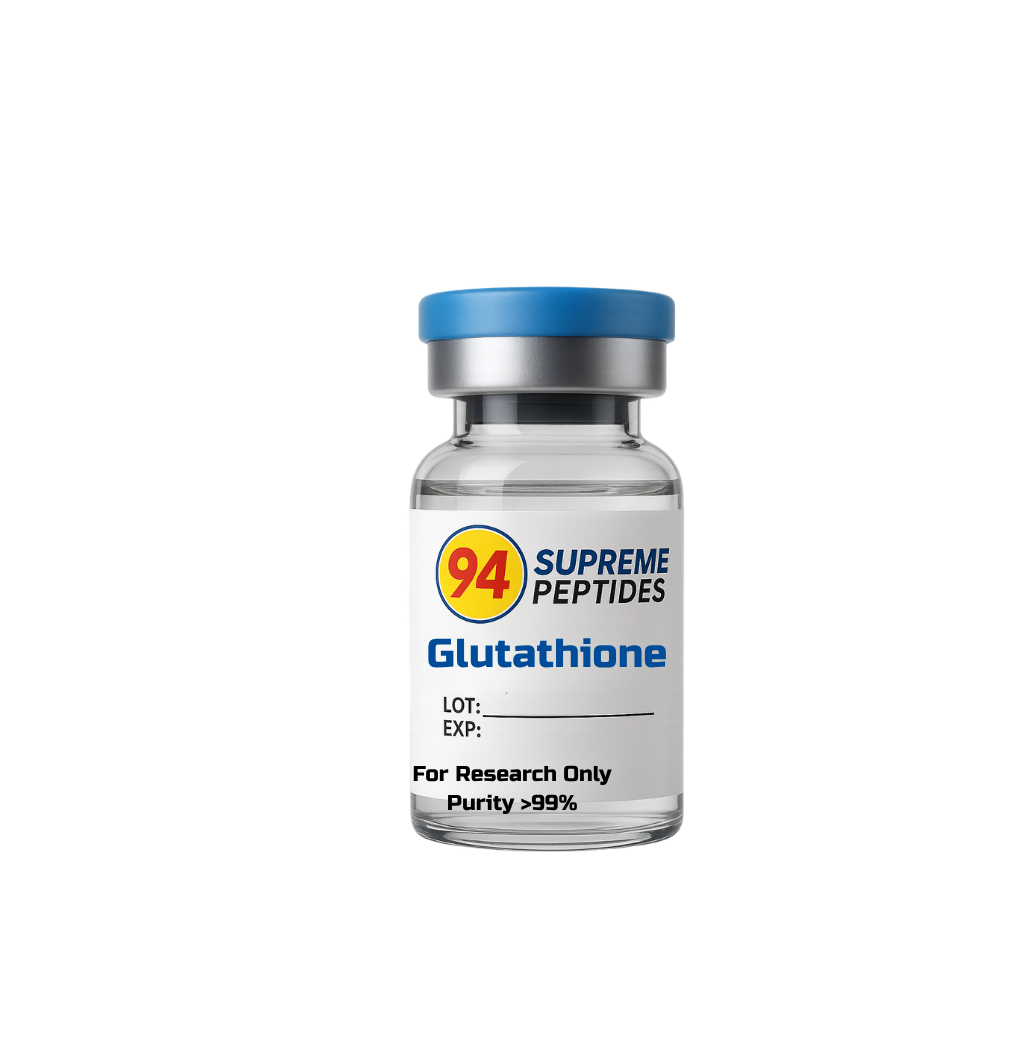
Glutathione
Research use only.
Glutathione is a small peptide the body makes and uses as one of its main antioxidants, helping to clean up cell damage and support the liver.
What it is studied for
- Antioxidant support: its role in handling oxidative stress in cells.
- Detox and liver: its role in clearing waste.
- Skin brightness: a popular focus in cosmetic research.
What is Glutathione?
Glutathione (GSH) is a tripeptide made of glutamate, cysteine and glycine. It is the most abundant low-molecular-weight thiol in animal cells and, with its oxidized form GSSG, the main cellular redox buffer. Researchers study it in antioxidant defence, detoxification of reactive compounds, redox signalling and oxidative stress models.
γ-Glu-Cys-Gly
Questions researchers ask
Is glutathione a peptide?
Yes. Glutathione is a tripeptide made of three amino acids: glutamate, cysteine and glycine. It is unusual because the glutamate is linked through its side-chain (gamma) carboxyl group rather than the normal peptide bond, which protects it from most peptidases. The cysteine's thiol group gives glutathione its antioxidant activity.
What does glutathione do?
In cells, glutathione neutralizes reactive oxygen species, often through glutathione peroxidase enzymes, and binds electrophilic toxins through glutathione S-transferases so they can be removed. It also helps maintain protein thiols, regulates redox signalling and supports immune cell function. These roles are why it is central to oxidative stress research.
What is the difference between reduced and oxidized glutathione?
Reduced glutathione (GSH) has a free thiol group and is the active antioxidant form. When two GSH molecules donate electrons, they join through a disulfide bond to form oxidized glutathione (GSSG). Glutathione reductase converts GSSG back to GSH using NADPH. The GSH-to-GSSG ratio is a standard marker of cellular oxidative stress.
How is glutathione made in the body?
Cells make glutathione in two ATP-dependent steps. Glutamate-cysteine ligase (gamma-glutamylcysteine synthetase) joins glutamate and cysteine, then glutathione synthetase adds glycine. The first step is rate-limiting and depends on cysteine availability, which is why cysteine precursors such as N-acetylcysteine are studied for supporting glutathione synthesis in research models.
How should glutathione be stored?
Dry reduced glutathione should be kept sealed, cool, dry and away from light. In solution, GSH slowly oxidizes to GSSG, faster at neutral or alkaline pH, in the presence of metal ions, and at room temperature. Laboratories usually prepare solutions fresh or store aliquots frozen, and verify the reduced form before critical assays.
Published research 2 peer-reviewed papers
Chemical data verified against a public reference database.
Reviewed by the 94 Supreme Peptides team · For laboratory research use only. Not for human or veterinary use.
About Glutathione
Glutathione (γ-glutamyl-cysteinyl-glycine) is a tripeptide and the most abundant intracellular antioxidant. Its thiol group donates electrons to neutralise reactive species, and it is a co-substrate for glutathione peroxidases and S-transferases — making it central to redox, oxidative-stress and detoxification research.
Key research areas
- Redox balance — The GSH/GSSG ratio as a marker of cellular oxidative state.
- Oxidative stress — Protection against reactive oxygen species in cell models.
- Detoxification pathways — Glutathione S-transferase conjugation of xenobiotics.
- Skin & melanin research — Pigmentation-pathway studies in dermatology research.
Specifications
| Compound class | Tripeptide antioxidant (γ-Glu-Cys-Gly) |
| Form | Lyophilized powder |
| Sizes | 1500mg |
| Purity | ≥99% (HPLC), per-batch COA |
| Storage | Lyophilized: store at −20 °C, protected from light. After reconstitution: 2–8 °C. |
Frequently asked questions
What is glutathione studied for?
Redox balance, oxidative stress, detoxification (GST) pathways and pigmentation research.
Is glutathione a peptide?
Yes — it is a tripeptide made of glutamate, cysteine and glycine.
How should it be stored?
Keep lyophilized vials cold and away from light; reconstituted glutathione oxidises more quickly, so keep it refrigerated and use it promptly.
Is glutathione for human use?
No. This product is sold strictly for laboratory research use only.
Related research compounds
For laboratory research use only. Not for human or veterinary consumption.
Guides about Glutathione
Related products
Customer reviews
Be the first to review this research peptide and help other researchers.
All products are sold strictly for laboratory and research use only — not for human or veterinary use, consumption, or therapeutic application. By purchasing you confirm you are a qualified researcher and accept full responsibility for safe handling and compliance with applicable laws.