

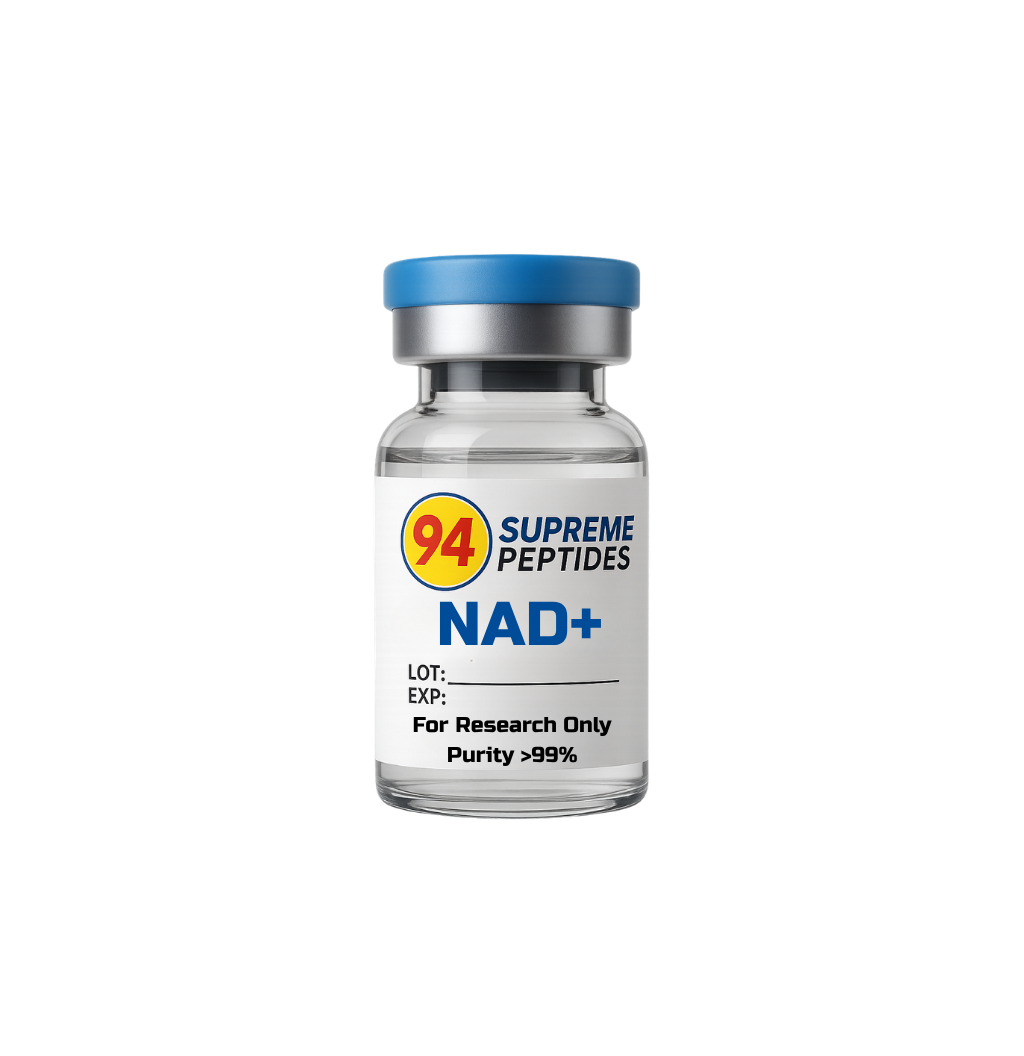
NAD+
Research use only.
NAD+ is a molecule found in every living cell. It plays a central role in turning food into energy and in cell repair. Levels naturally fall with age, which is why it is a busy area of research.
What it is studied for
- Energy and metabolism: its role in how cells make energy.
- Healthy ageing: its role in cell repair and DNA maintenance.
- Focus and clarity: effects on the brain in research settings.
What is NAD+?
NAD+ (nicotinamide adenine dinucleotide) is a coenzyme found in every living cell. It carries electrons in the redox reactions of energy metabolism and is consumed by enzymes such as sirtuins, PARPs and CD38. Researchers study NAD+ because its levels decline with age in rodents and humans, linking it to metabolism, DNA repair and ageing biology.
Questions researchers ask
Is NAD+ a peptide?
No. NAD+ is a dinucleotide: two nucleotides, one containing nicotinamide and one containing adenine, joined through their phosphate groups. It contains no amino acids. It is often sold alongside research peptides because it is used in related metabolism and ageing research, but chemically it is a coenzyme, not a peptide.
What is NAD+ used for in research?
NAD+ is used to study cellular energy metabolism, mitochondrial function, DNA repair, and the NAD+-consuming enzymes such as sirtuins, PARPs and CD38. Because tissue NAD+ levels fall with age in model organisms, it is central to ageing research. Many studies also test NAD+ precursors to raise cellular NAD+ levels in animal models.
What is the difference between NAD+ and NADH?
NAD+ and NADH are the oxidized and reduced forms of the same coenzyme. NAD+ accepts electrons (as a hydride) during reactions such as glycolysis and the citric acid cycle, becoming NADH. NADH then donates those electrons to the mitochondrial electron transport chain. The NAD+/NADH ratio is a key indicator of cellular redox state.
What is the difference between NAD+, NMN and NR?
NMN (nicotinamide mononucleotide) and NR (nicotinamide riboside) are precursors that cells convert into NAD+ through the salvage pathway. NAD+ is the finished coenzyme. Much published ageing research uses NMN or NR in animal models to raise NAD+ levels, while NAD+ itself is used directly in biochemical and cell-based experiments.
Does NAD+ need to be refrigerated?
Dry NAD+ powder should be kept sealed, protected from moisture and light, and stored cold, typically at 2 to 8 °C or frozen for long-term storage. NAD+ in solution is less stable, especially at alkaline pH or higher temperatures, so laboratories usually prepare solutions fresh or store small aliquots frozen.
Published research 2 peer-reviewed papers
Chemical data verified against a public reference database.
Reviewed by the 94 Supreme Peptides team · For laboratory research use only. Not for human or veterinary use.
Guides about NAD+
Related products
Customer reviews
Be the first to review this research peptide and help other researchers.
All products are sold strictly for laboratory and research use only — not for human or veterinary use, consumption, or therapeutic application. By purchasing you confirm you are a qualified researcher and accept full responsibility for safe handling and compliance with applicable laws.