

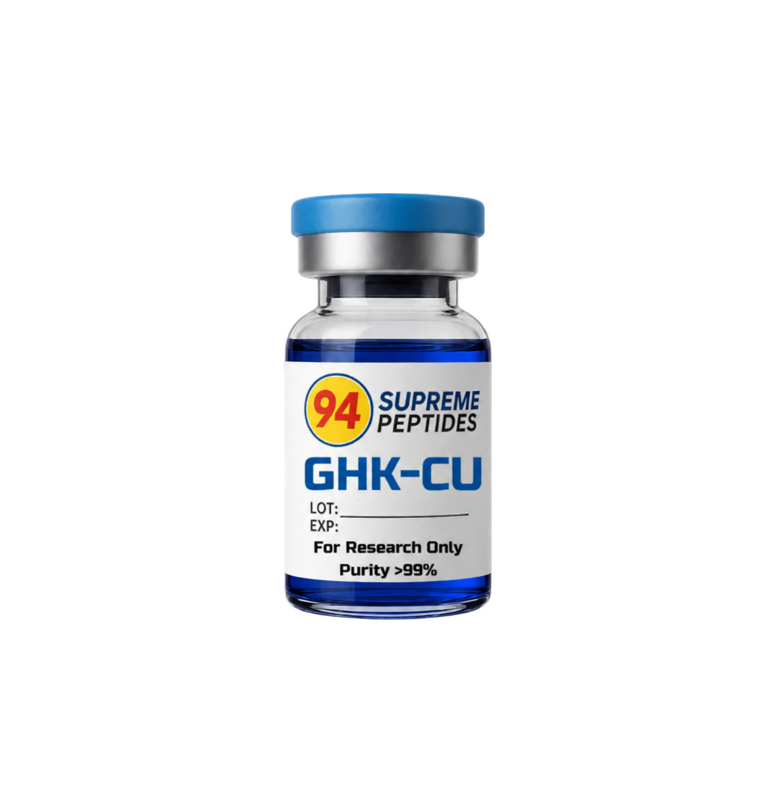
GHK-Cu
Research use only.
GHK-Cu is a small copper-carrying peptide the body makes naturally. It is very well known in skin and repair research and is also used in high-end skincare.
What it is studied for
- Skin health: firmness and elasticity measures in cosmetic research.
- Repair: wound and tissue healing in research models.
- Hair: effects on hair follicles and thickness.
What is GHK-Cu?
GHK-Cu is a copper-binding tripeptide (glycine-histidine-lysine) that occurs naturally in human plasma, saliva and urine. In cell and animal research it is studied for collagen production, wound repair and gene expression linked to tissue remodelling. It is a common cosmetic ingredient; the material sold here is for laboratory research use only.
Gly-His-Lys (copper complex)
Questions researchers ask
Is GHK-Cu naturally occurring?
Yes. GHK was first isolated from human plasma, where it binds copper to form GHK-Cu. Published reviews report plasma levels of about 200 ng/mL around age 20, falling to roughly 80 ng/mL by age 60. Research-grade GHK-Cu is synthesized in the lab and then complexed with copper.
Why is GHK-Cu blue?
GHK-Cu contains a copper(II) ion held by the peptide's nitrogen atoms. Copper(II) complexes like this absorb light in the orange-red part of the spectrum, so they appear blue. A blue or blue-violet powder and solution are normal for GHK-Cu and confirm that copper is bound.
What is the difference between GHK-Cu and AHK-Cu?
Both are copper-binding tripeptides. GHK-Cu (glycine-histidine-lysine) occurs naturally in the body and has the larger body of research on skin, collagen and wound repair. AHK-Cu swaps glycine for alanine; it is synthetic and has mainly been studied for hair follicle growth in laboratory models.
Is GHK-Cu legal in Canada?
In Canada, GHK-Cu (INCI name copper tripeptide-1) is used as an ingredient in cosmetic skin care. It is not authorized by Health Canada as a drug for human use. The research-grade powder sold here is for laboratory use only and is not sold for human consumption. This is not legal advice.
How should GHK-Cu be stored?
Lyophilized GHK-Cu is typically kept frozen at about -20 °C for long-term storage, or refrigerated for short periods, sealed and away from light and moisture. After reconstitution with bacteriostatic water, labs keep the solution at 2 to 8 °C, avoid repeated freeze-thaw cycles and use it within a few weeks. Copper peptides are light sensitive, so protect vials from light.
Published research 2 peer-reviewed papers
Chemical data verified against a public reference database.
Reviewed by the 94 Supreme Peptides team · For laboratory research use only. Not for human or veterinary use.
Guides about GHK-Cu
Related products
Customer reviews
Be the first to review this research peptide and help other researchers.
All products are sold strictly for laboratory and research use only — not for human or veterinary use, consumption, or therapeutic application. By purchasing you confirm you are a qualified researcher and accept full responsibility for safe handling and compliance with applicable laws.