

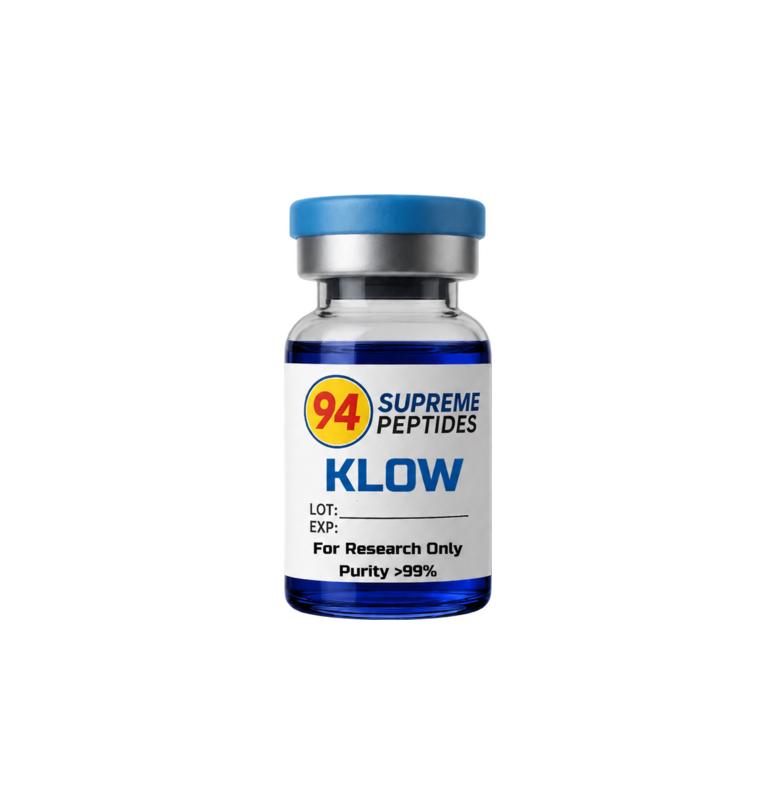
Klow
Research use only.
KLOW is a research blend that combines four peptides in one vial - BPC-157, TB-500, KPV and GHK-Cu. It builds on the idea behind GLOW by adding KPV, a peptide studied for calming inflammation.
What is in each vial (KLOW 80mg)
- BPC-157 - 10 mg (repair and recovery)
- TB-500 - 10 mg (repair and flexibility)
- KPV - 10 mg (inflammation, gut and skin research)
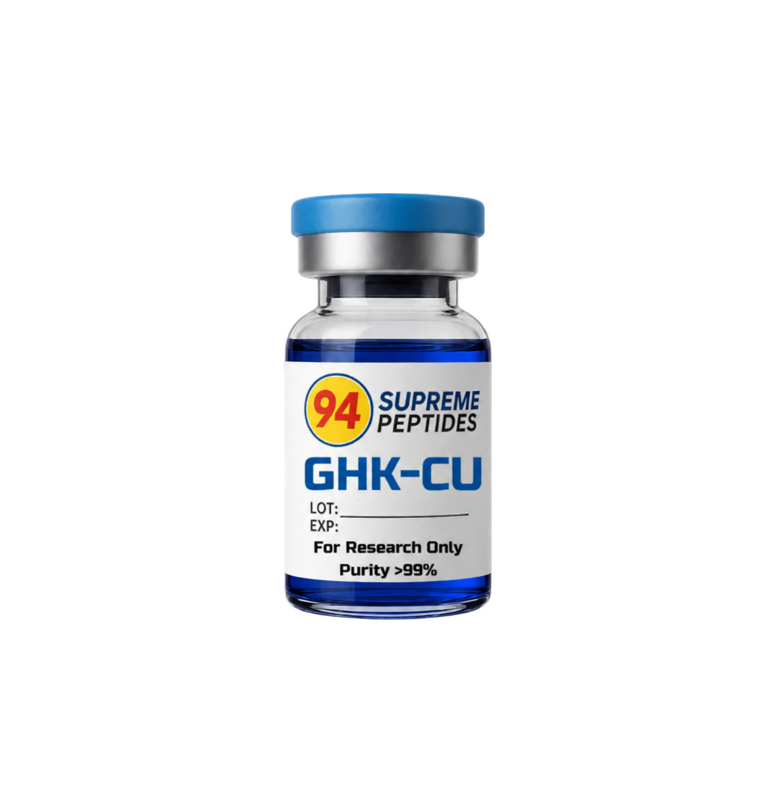
- GHK-Cu - 50 mg (skin and tissue support)
What it is studied for
- Recovery: repair of muscle, tendon and soft tissue.
- Calming inflammation: the addition of KPV.
- Skin and gut: support from GHK-Cu and KPV.
What is KLOW Blend (BPC-157 + TB-500 + KPV + GHK-Cu)?
KLOW is a four-peptide research blend in one 80 mg vial: BPC-157 (10 mg), TB-500 (10 mg), KPV (10 mg) and GHK-Cu (50 mg). It builds on the GLOW blend by adding KPV, a tripeptide studied for intestinal inflammation in animal models. It is supplied for laboratory research use only.
Questions researchers ask
What is in the KLOW blend?
Each 80 mg KLOW vial holds 10 mg BPC-157, 10 mg TB-500, 10 mg KPV and 50 mg GHK-Cu as a lyophilized powder. That is the GLOW formula plus KPV. Each component is synthesized and HPLC tested before blending, and every batch comes with a certificate of analysis.
Is GHK-Cu in KLOW?
Yes. GHK-Cu is the largest component of KLOW at 50 mg per 80 mg vial, the same amount found in GLOW. GHK-Cu is a naturally occurring copper-binding tripeptide studied for collagen synthesis and skin remodelling, and its copper content is why reconstituted KLOW has a blue tint.
What is the difference between GLOW and KLOW?
GLOW contains three peptides, BPC-157, TB-500 and GHK-Cu, totalling 70 mg. KLOW contains the same three in the same amounts plus 10 mg of KPV, for 80 mg. KPV is a tripeptide derived from alpha-MSH that is studied for its anti-inflammatory activity, especially in intestinal research models.
What is the difference between BPC-157 and KPV?
BPC-157 is a 15-amino-acid fragment of a gastric protein studied for tissue repair and blood vessel growth. KPV is only three amino acids, lysine-proline-valine, taken from the end of alpha-MSH. In mouse colitis models, KPV enters intestinal cells through the PepT1 transporter and reduces inflammatory signalling.
Is the KLOW blend legal in Canada?
In Canada, KLOW is sold as a research chemical for laboratory use only. It is not authorized by Health Canada as a drug for human use, so it cannot be sold for human consumption. None of its peptides is an approved drug. This is general information, not legal advice; researchers should confirm the rules that apply to them.
Published research 3 peer-reviewed papers
Reviewed by the 94 Supreme Peptides team · For laboratory research use only. Not for human or veterinary use.
Guides about Klow
Customer reviews
Be the first to review this research peptide and help other researchers.
All products are sold strictly for laboratory and research use only — not for human or veterinary use, consumption, or therapeutic application. By purchasing you confirm you are a qualified researcher and accept full responsibility for safe handling and compliance with applicable laws.