

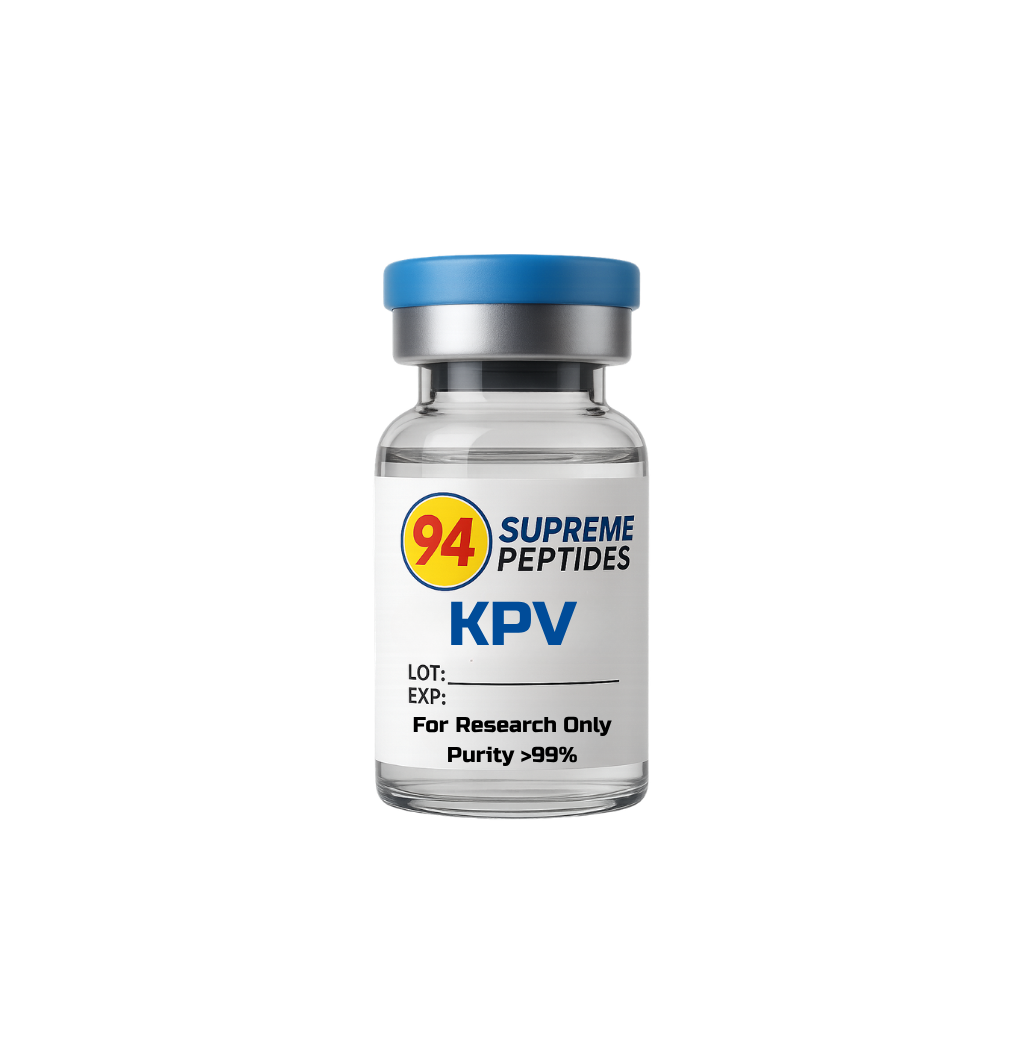
KPV
Research use only.
KPV is a tiny three-part peptide taken from a natural hormone (alpha-MSH). It is studied mostly for calming inflammation, especially in the gut.
What it is studied for
- Gut comfort: inflammation in the digestive tract in research models.
- Skin: inflammatory signals in skin models.
- Immune balance: its effect on inflammatory signals.
What is KPV?
KPV is a tripeptide made of lysine, proline and valine, the last three amino acids of the natural hormone alpha-MSH. In cell and mouse studies it is researched for its anti-inflammatory activity, especially in models of intestinal inflammation such as colitis. It is sold here for laboratory research use only.
Lys-Pro-ValQuestions researchers ask
What is KPV derived from?
KPV corresponds to amino acids 11 to 13 of alpha-melanocyte-stimulating hormone (alpha-MSH), a natural hormone cut from the larger precursor protein POMC. Researchers isolated this short C-terminal sequence because it kept much of alpha-MSH's anti-inflammatory activity without its pigment-related effects. Research KPV is made synthetically.
How does KPV work?
In a 2008 Gastroenterology study, KPV was taken up into intestinal epithelial cells and immune cells through the PepT1 peptide transporter. Inside the cells it reduced NF-kB and MAP kinase inflammatory signalling and lowered pro-inflammatory cytokine release, which reduced colitis severity in mouse models.
What is the difference between BPC-157 and KPV?
BPC-157 is a 15-amino-acid peptide from a gastric protein, studied for tissue repair, gut lining protection and blood vessel growth. KPV is a three-amino-acid fragment of alpha-MSH, studied mainly for calming inflammatory signalling. Both appear in gut research, but their structures and mechanisms are unrelated.
Is KPV legal in Canada?
In Canada, KPV is sold as a research chemical for laboratory use only. It is not authorized by Health Canada as a drug for human use, so it cannot be sold for human consumption. This is general information, not legal advice; researchers should confirm the rules that apply to them.
How should KPV be stored after reconstitution?
Lyophilized KPV is typically kept frozen at about -20 °C for long-term storage, or refrigerated for short periods, sealed and away from light and moisture. After reconstitution with bacteriostatic water, labs keep the solution at 2 to 8 °C, avoid repeated freeze-thaw cycles and use it within a few weeks.
Published research 2 peer-reviewed papers
Chemical data verified against a public reference database.
Reviewed by the 94 Supreme Peptides team · For laboratory research use only. Not for human or veterinary use.
Guides about KPV
Related products
Customer reviews
Be the first to review this research peptide and help other researchers.
All products are sold strictly for laboratory and research use only — not for human or veterinary use, consumption, or therapeutic application. By purchasing you confirm you are a qualified researcher and accept full responsibility for safe handling and compliance with applicable laws.