

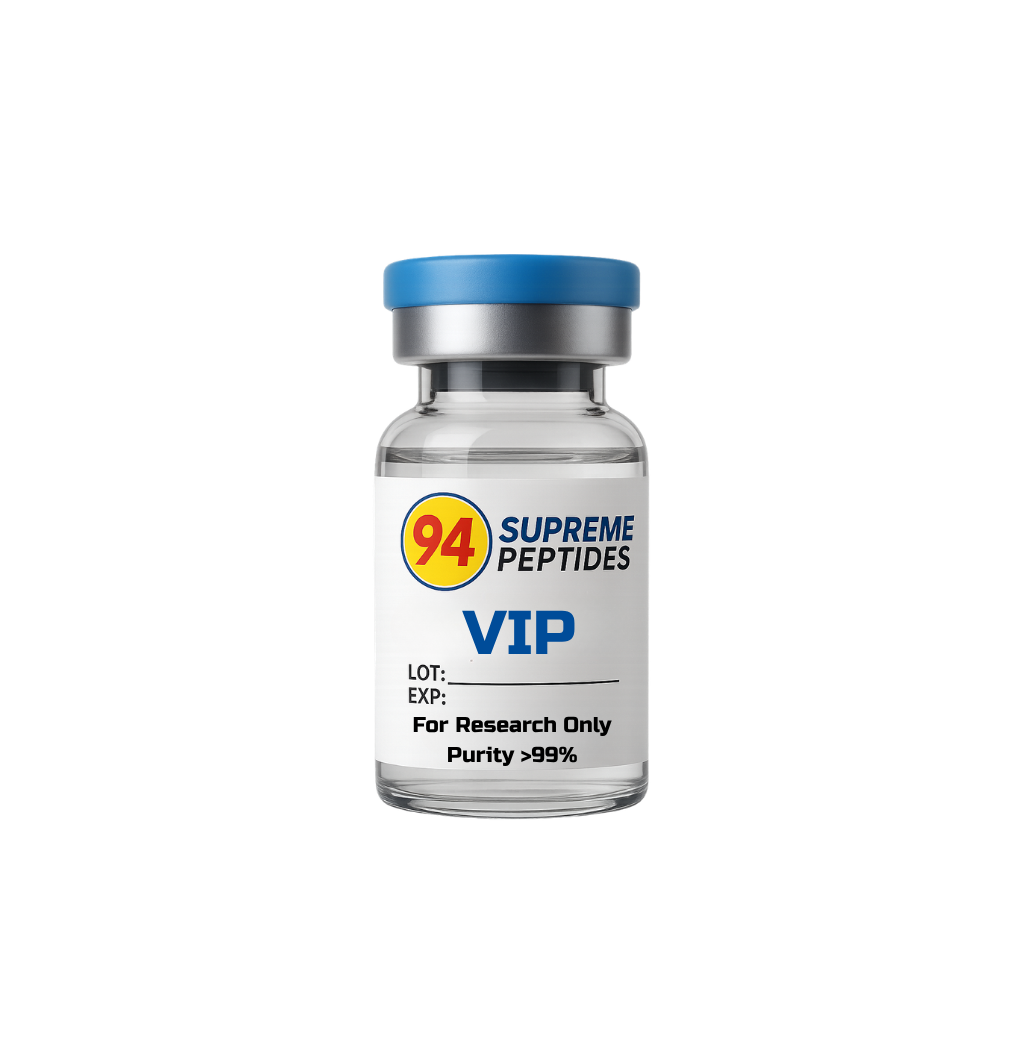
VIP
Research use only.
VIP (Vasoactive Intestinal Peptide) is a small peptide the body makes on its own. It acts as a messenger between the nervous system, the immune system and the gut, which is why it is a popular subject in research.
What it is studied for
- Calming inflammation: its effect on immune signalling in research models.
- Gut and lung health: its role in the digestive tract and airways.
- Whole-body signalling: how the nervous, hormonal and immune systems talk to each other.
What is VIP (Vasoactive Intestinal Peptide)?
VIP, or vasoactive intestinal peptide, is a 28-amino-acid neuropeptide made naturally by neurons and immune cells. It acts through the VPAC1 and VPAC2 receptors and is studied for its roles in gut motility and secretion, blood vessel relaxation, airway function and immune regulation. Synthetic VIP sold here is for laboratory research only.
His-Ser-Asp-Ala-Val-Phe-Thr-Asp-Asn-Tyr-Thr-Arg-Leu-Arg-Lys-Gln-Met-Ala-Val-Lys-Lys-Tyr-Leu-Asn-Ser-Ile-Leu-Asn-NH2Questions researchers ask
What is VIP peptide?
VIP is a neuropeptide first isolated from pig intestine in 1970. It has 28 amino acids and belongs to the same family as secretin, glucagon and PACAP. It is found throughout the central and peripheral nervous systems and in immune cells, where it acts as a chemical messenger. The synthetic form is also called aviptadil.
What is VIP studied for in research?
VIP is studied in models of inflammation and autoimmunity, gut physiology, lung and airway biology, circadian rhythm and blood flow. Reviews describe it as a neuropeptide with broad immune effects, including shifting cytokine production and supporting regulatory T cells. These findings come from cell, animal and limited clinical research.
How does VIP work?
VIP binds two G protein-coupled receptors, VPAC1 and VPAC2, and to a lesser extent the PAC1 receptor. Binding raises cyclic AMP inside the cell, which relaxes smooth muscle, stimulates water and electrolyte secretion in the gut and dampens pro-inflammatory signalling in immune cells, according to published reviews.
Is VIP legal in Canada?
In Canada, VIP is sold as a research chemical for laboratory use. No product containing VIP or aviptadil is listed in Health Canada's Drug Product Database, so it is not authorized as a drug for human use and cannot be sold for human consumption. It is not FDA approved either.
How should VIP be stored?
Keep the sealed, lyophilized vial cold and away from light: refrigerated short term or frozen for longer storage. After reconstitution with bacteriostatic water, keep it refrigerated. VIP is degraded quickly by peptidases and contains a methionine that can oxidize, so limit air exposure, temperature swings and freeze-thaw cycles.
Published research 2 peer-reviewed papers
Chemical data verified against a public reference database.
Reviewed by the 94 Supreme Peptides team · For laboratory research use only. Not for human or veterinary use.
Guides about VIP
Related products
Customer reviews
Be the first to review this research peptide and help other researchers.
All products are sold strictly for laboratory and research use only — not for human or veterinary use, consumption, or therapeutic application. By purchasing you confirm you are a qualified researcher and accept full responsibility for safe handling and compliance with applicable laws.