

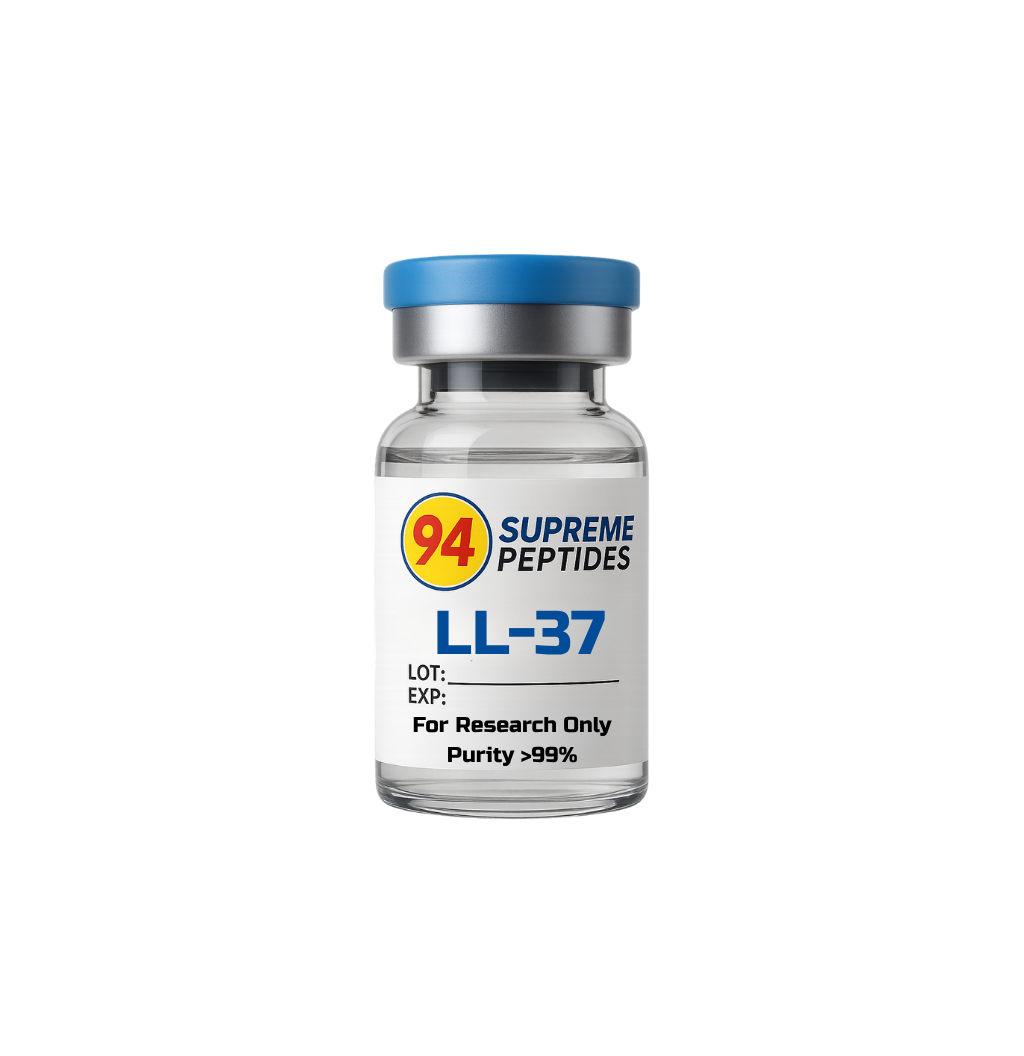
LL-37
Research use only.
LL-37 is a peptide the human body produces as part of its natural defence system. It is studied for the way it deals with microbes and supports the skin and immune system.
What it is studied for
- Natural defence: its activity against bacteria and other microbes.
- Wound repair: its role in skin and tissue repair in research models.
- Immune balance: its effect on the body's inflammatory signals.
What is LL-37?
LL-37 is a 37-amino-acid antimicrobial peptide and the only cathelicidin made by humans. It is released by immune and skin cells as part of innate defence. In laboratory research it is studied for killing bacteria, disrupting biofilms, modulating immune signalling and wound repair. It is sold here for laboratory research use only.
LLGDFFRKSKEKIGKEFKRIVQRIKDFLRNLVPRTESQuestions researchers ask
What is LL-37 derived from?
LL-37 comes from a larger precursor protein called hCAP18, the only human cathelicidin. Neutrophils and skin cells store hCAP18, and enzymes such as proteinase 3 cut it to release the active 37-amino-acid LL-37 peptide. Research-grade LL-37 is made by solid-phase peptide synthesis rather than extracted from tissue.
Why is it called LL-37?
The name describes its structure. The peptide begins with two leucine residues (L, L) and is 37 amino acids long. Its full sequence is LLGDFFRKSKEKIGKEFKRIVQRIKDFLRNLVPRTES, which gives it a positive charge and a helical shape that lets it interact with microbial membranes.
How does LL-37 work?
LL-37 is positively charged and folds into an amphipathic helix, so it binds negatively charged bacterial membranes and disrupts them. Beyond direct antimicrobial action, laboratory studies show it neutralizes bacterial endotoxin, attracts immune cells, influences cytokine release and promotes blood vessel formation and epithelial repair.
Is LL-37 legal in Canada?
In Canada, LL-37 is sold as a research chemical for laboratory use only. It is not authorized by Health Canada as a drug for human use, so it cannot be sold for human consumption. This is general information, not legal advice; researchers should confirm the rules that apply to them.
How should LL-37 be stored?
Lyophilized LL-37 is typically kept frozen at about -20 °C for long-term storage, or refrigerated for short periods, sealed and away from light and moisture. After reconstitution with bacteriostatic water, labs keep the solution at 2 to 8 °C, avoid repeated freeze-thaw cycles and use it within a few weeks. Mix gently to limit aggregation.
Published research 2 peer-reviewed papers
Chemical data verified against a public reference database.
Reviewed by the 94 Supreme Peptides team · For laboratory research use only. Not for human or veterinary use.
Guides about LL-37
Related products
Customer reviews
Be the first to review this research peptide and help other researchers.
All products are sold strictly for laboratory and research use only — not for human or veterinary use, consumption, or therapeutic application. By purchasing you confirm you are a qualified researcher and accept full responsibility for safe handling and compliance with applicable laws.