

How to Reconstitute Retatrutide: A Step-by-Step Research Guide
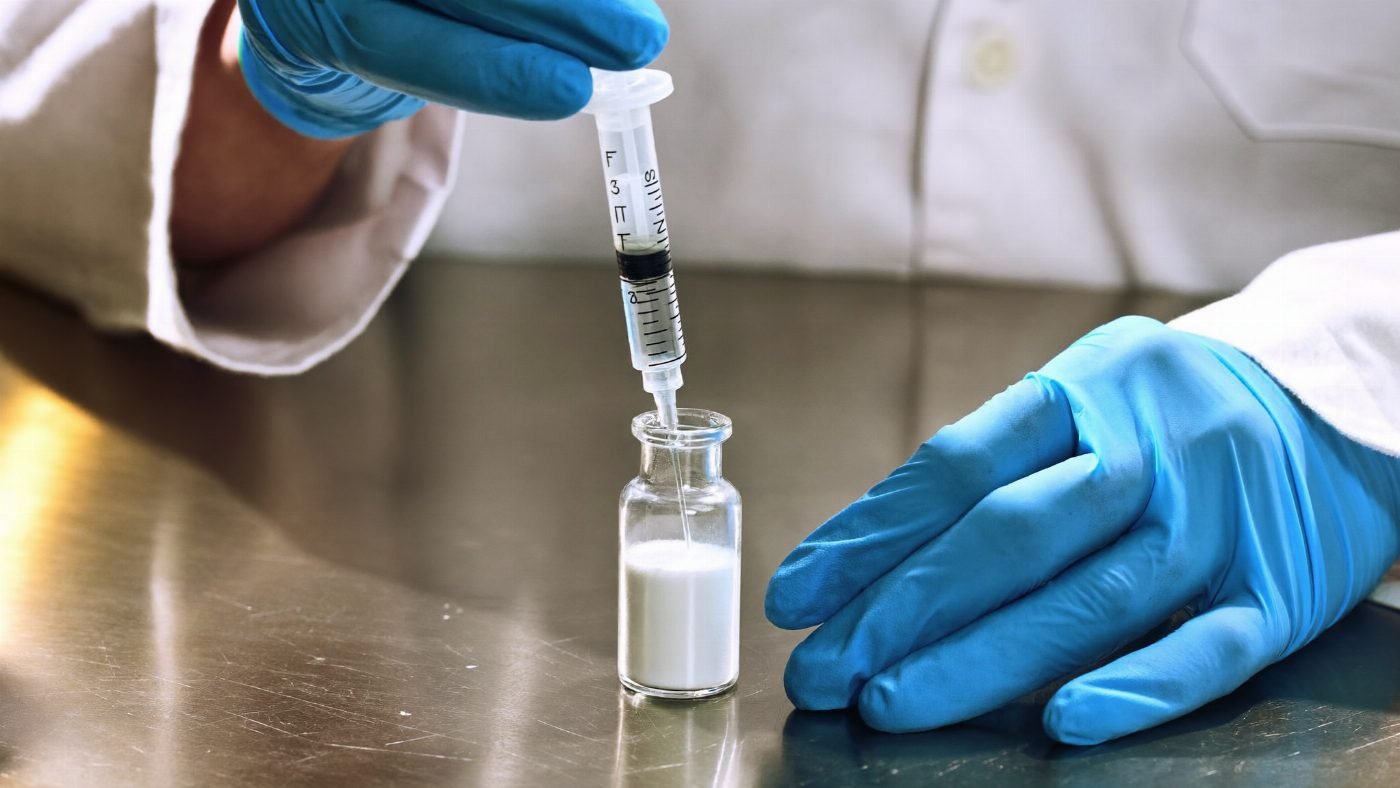
Reconstitution is the step where a freeze-dried research peptide becomes a measured solution — and the part that trips people up is the arithmetic, not the handling. This guide explains what reconstitution means in a research setting and how the concentration math works. Framed for research context only; it is not a dosing or administration guide.
What reconstitution means
Research peptides ship as a lyophilized (freeze-dried) powder because they are more stable that way. To study them in solution, that powder is dissolved in a sterile solvent — most commonly bacteriostatic water. That single step is "reconstitution": turning a dry powder into a liquid of known concentration.
The handling itself is ordinary lab technique. What actually determines whether your solution is usable data is getting the concentration right — which is arithmetic.
What a research setting uses
Reconstitution in a lab context typically involves the vial of lyophilized peptide, bacteriostatic water as the solvent, and clean technique for transferring the liquid. The solvent is added gently, and the vial is swirled rather than shaken so the peptide dissolves without excess foaming. Nothing here is an instruction for human use.
The concentration math
This is where results are won or lost. Concentration is just mass divided by volume:
Concentration = peptide mass ÷ solvent volume
Example: 10 mg of peptide reconstituted in 2 mL of bacteriostatic water gives 5 mg/mL. Add 1 mL instead and the same vial is 10 mg/mL. The powder did not change — only the volume of water did.
Because the mass is fixed, the volume of solvent you add is the only lever — and a slipped decimal is the most common source of error. That is exactly the kind of thing a calculator should handle.
Let the calculator do it
Rather than working the arithmetic by hand, our free peptide reconstitution calculator takes the vial's peptide mass and your chosen solvent volume and returns the resulting concentration instantly — no decimal slips. It is the fastest way to plan a batch and keep your records consistent.
Storage after reconstitution
Once in solution, a peptide is less stable than the dry powder. As a general rule for research handling, lyophilized peptide is most stable frozen, while a reconstituted solution is kept cold and used within a limited window, since potency declines with time and temperature. Our storage potency calculator estimates how that decline looks under different conditions so you can judge whether a solution is still fit for your experiment.
Frequently asked questions
What is reconstitution, in one sentence?
Dissolving a lyophilized (freeze-dried) research peptide in a sterile solvent, usually bacteriostatic water, to make a solution of known concentration.
What solvent is used?
Bacteriostatic water is the most common choice in a research setting because the small amount of benzyl alcohol helps limit microbial growth in a multi-use vial.
How do I work out the concentration?
Divide the peptide mass by the solvent volume. 10 mg in 2 mL is 5 mg/mL. The reconstitution calculator does this for you.
Does this apply to peptides like retatrutide or BPC-157?
The concentration math is the same for any lyophilized research peptide — only the mass in the vial and the solvent volume change. The calculator works across products.
Is this a guide for human use?
No. This describes reconstitution as laboratory handling for research. These compounds are not for human or veterinary use, and this is not a dosing or administration guide.
Reconstitution made simple
Use our free calculators to get concentration and storage right, every batch.
For research use only. Not for human or veterinary consumption. This article describes reconstitution as laboratory handling and concentration arithmetic for research; it is not medical advice, not a dosing protocol, and not an administration guide. Products are sold strictly as research chemicals.