

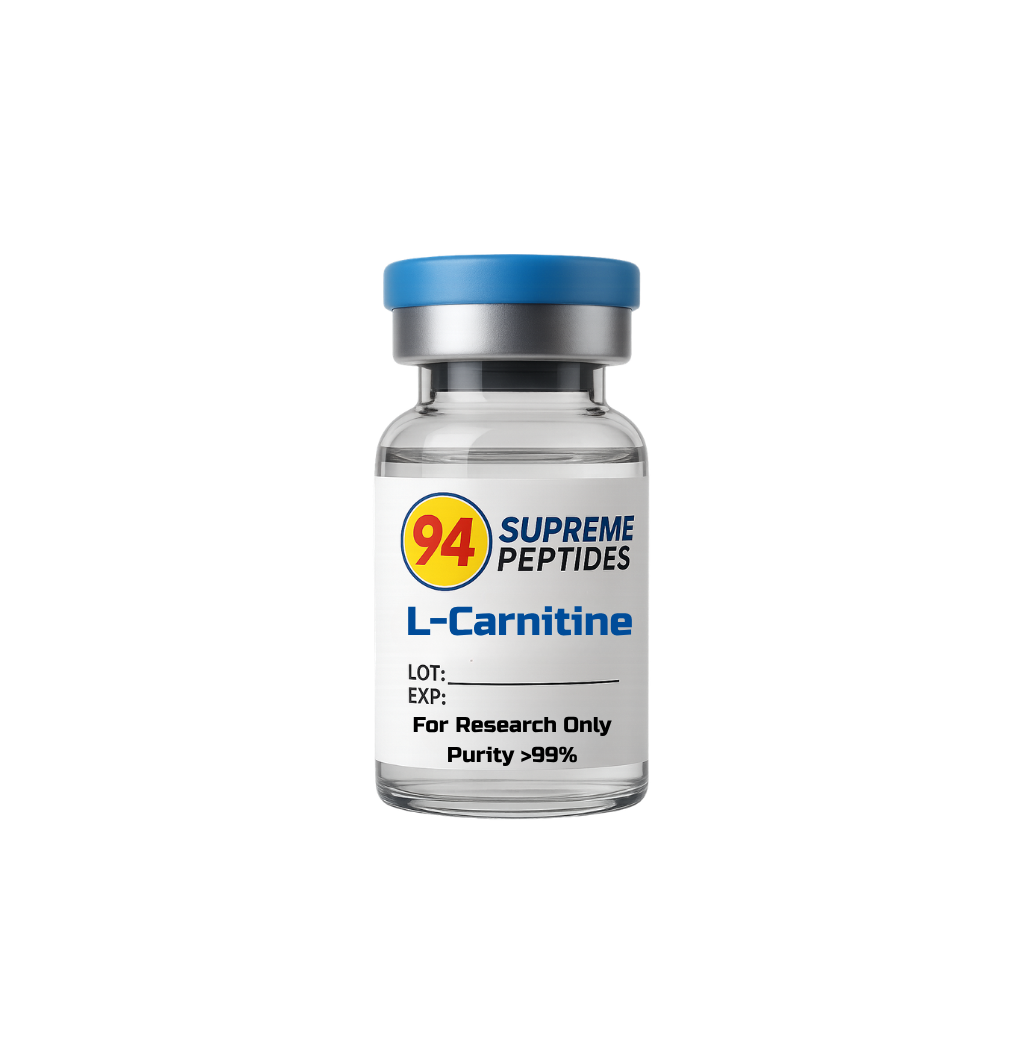
L-Carnitine
Research use only.
L-Carnitine is a natural compound the body uses to turn fat into energy. In injectable form it is studied for metabolism, energy and recovery.
What it is studied for
- Fat metabolism: helping the body use fat for fuel.
- Energy and stamina: its effect on physical performance.
- Recovery: reducing tiredness after exercise in research models.
What is L-Carnitine?
L-Carnitine is a small, naturally occurring compound made in the body from the amino acids lysine and methionine. Its best-known role is the carnitine shuttle, which carries long-chain fatty acids into mitochondria so they can be oxidized for energy. Researchers study it in fatty acid metabolism, mitochondrial function and acylcarnitine signalling.
Questions researchers ask
What does L-carnitine do?
L-Carnitine transports long-chain fatty acids across the inner mitochondrial membrane, where they are broken down by beta-oxidation to produce energy. Enzymes called carnitine palmitoyltransferases (CPT1 and CPT2) handle this carnitine shuttle. Recent research also links carnitine and acylcarnitines to mitochondrial health, inflammation, signalling and gene regulation.
Is L-carnitine an amino acid or a peptide?
Neither, strictly. L-Carnitine is sometimes called an amino acid derivative because the body makes it from lysine and methionine, but it is a small quaternary ammonium compound (molecular weight about 161 g/mol), not a protein-building amino acid and not a peptide. It is a single molecule, not a chain.
What is the difference between L-carnitine and acetyl-L-carnitine?
Acetyl-L-carnitine (ALCAR) is L-carnitine with an acetyl group attached. It is one of the acylcarnitines formed naturally in cells and can donate its acetyl group to metabolism. It is more often studied in brain and nerve research, while plain L-carnitine is the standard form used in fatty acid transport studies.
Is L-carnitine made in the body?
Yes. Mammals synthesize L-carnitine mainly in the liver and kidneys from lysine and methionine, with vitamin C, iron and vitamin B6 needed as cofactors. It is also obtained from food, especially red meat. Most of the body's carnitine pool is stored in skeletal and heart muscle, which rely heavily on fatty acid oxidation.
How should L-carnitine be stored?
L-Carnitine powder is hygroscopic, meaning it readily absorbs moisture from the air. Keep vials tightly sealed, dry and away from heat and light; refrigeration at 2 to 8 °C is a sensible default. Once dissolved for laboratory use, store solutions refrigerated and use them within the stability window your protocol has validated.
Published research 2 peer-reviewed papers
Chemical data verified against a public reference database.
Reviewed by the 94 Supreme Peptides team · For laboratory research use only. Not for human or veterinary use.
Customer reviews
Be the first to review this research peptide and help other researchers.
All products are sold strictly for laboratory and research use only — not for human or veterinary use, consumption, or therapeutic application. By purchasing you confirm you are a qualified researcher and accept full responsibility for safe handling and compliance with applicable laws.