

How to Read a COA (and What HPLC ≥99% Really Means)
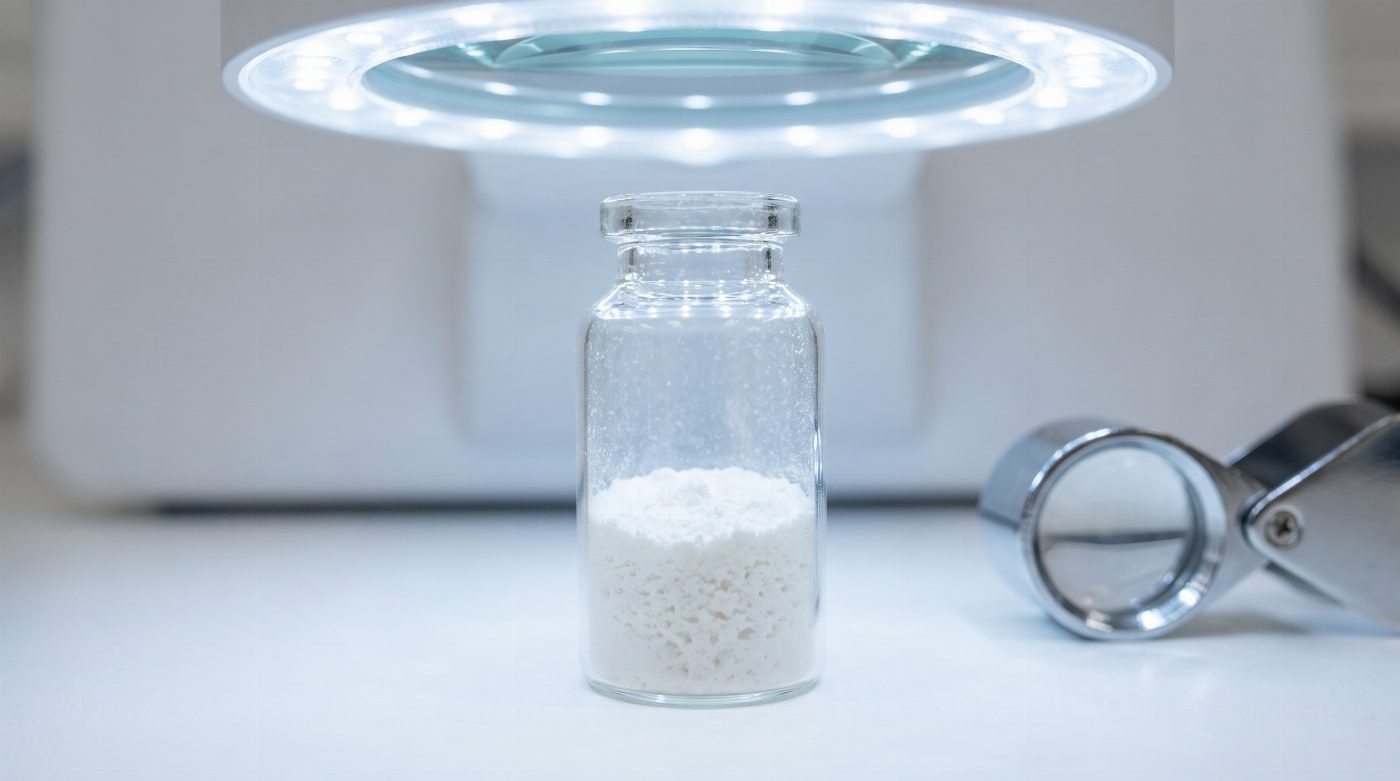
A Certificate of Analysis (COA) is the single most useful document a research-peptide buyer can read — and most people never actually read theirs. This guide shows you how to read a COA in under a minute, what "HPLC ≥99%" really means, and the red flags that separate a real certificate from a marketing prop.
What a COA actually is
A Certificate of Analysis is a lab report for one specific batch of one specific compound. It states what the compound is, which batch it came from, how pure it tested, and by what method. A good COA is tied to a batch number — not a generic document reused across every order. That batch-specific link is the whole point.
How to read one in under a minute
Scan for five things, in this order:
- Compound name — does it match exactly what you ordered?
- Batch / lot number — and does it match the number on your vial? This is the check almost everyone skips.
- Purity figure — the headline number, usually from HPLC.
- Test method — HPLC (and often MS for identity). No method named is a red flag.
- Date and lab — recent, and ideally from a named third-party lab.
What "HPLC ≥99%" means
HPLC (High-Performance Liquid Chromatography) separates the contents of a sample so each component shows up as a peak. "Purity" is the size of the main peak relative to everything else — so ≥99% means the target compound accounts for at least 99% of what was detected, with impurities under 1%. Two things make that number trustworthy: it should be measured per batch, and ideally verified by a third-party lab rather than only in-house.
Red flags to watch for
- No COA at all — or "available on request" that never arrives.
- One COA for everything — the same certificate reused across products and batches.
- Batch number that does not match your vial — the document describes a different batch.
- No test method named — a purity number with no HPLC/MS behind it is just a claim.
- No date or no lab — you cannot tell how old the test is or who ran it.
Every 94 Supreme batch ships with its own COA
Third-party tested to HPLC ≥99%, per batch — with the batch number that matches your vial, not one old test reused forever. See the certificates.
Frequently asked questions
What is the most important thing on a COA?
The batch number matching your vial. A purity figure only means something if the certificate describes the exact batch you received.
What does HPLC ≥99% mean?
The target compound is at least 99% of what HPLC detected, with impurities under 1%. It is most meaningful when tested per batch and verified by a third party.
Is in-house testing enough?
Third-party testing is stronger, because the lab running it has no stake in the result.
Why does any of this matter for research?
Impurities are variables. A per-batch COA tells you your results reflect the compound, not contaminants.
Purity you can prove
See a real per-batch COA before you order — HPLC ≥99%, third-party tested.
For research use only. Not for human or veterinary consumption. This article is educational; products are sold strictly as research chemicals.