

BPC-157 Research Guide: Mechanism, Studies & How to Verify Purity

BPC-157 is one of the most-studied peptides in soft-tissue and recovery research. This guide covers what BPC-157 actually is, how researchers describe its mechanism, what the preclinical literature has investigated, how it compares with TB-500, and — the part most sites skip — how to verify what is really in the vial. Everything here is framed for research context only.
What is BPC-157?
BPC-157 (Body Protection Compound-157) is a synthetic pentadecapeptide — a chain of 15 amino acids — derived from a partial sequence of a protein found in human gastric juice. It is a stable peptide that has been used widely as a research compound in preclinical models studying tissue repair, the gastrointestinal tract, and vascular biology.
It is important to be clear about status: BPC-157 is not an approved drug or supplement. The overwhelming majority of the published literature comes from animal and in-vitro studies, and it is sold and studied strictly as a research chemical. That research framing shapes everything below.
How researchers describe its mechanism
Across the literature, a few recurring mechanisms come up when researchers describe how BPC-157 behaves in models. Rather than a single pathway, reviews tend to describe a cluster of effects observed in preclinical settings:
- Angiogenesis — the formation of new blood vessels. Studies frequently associate BPC-157 with upregulation of vascular pathways (including the VEGFR2 pathway) in animal and cell models.
- Growth-factor and fibroblast activity — cell studies have examined its effect on fibroblast outgrowth, survival, and migration, which researchers connect to tendon and soft-tissue models.
- Nitric oxide (NO) system interaction — a large body of Sikiric-group work discusses BPC-157's interaction with the NO pathway.
These are descriptions of what has been observed in research models — not statements about outcomes in people. Human clinical data remains limited, and that gap is one of the most honest things any BPC-157 article can tell you.
What the research investigates
Instead of a "dosing by goal" chart, here is what the preclinical literature has actually studied. Each area is an active research question, not a promised result.
Tendon, ligament & soft tissue
This is the most-cited area. In a widely referenced cell study, researchers reported that BPC-157 promoted the outgrowth, survival, and migration of tendon fibroblasts in vitro (Chang et al., 2011). Review papers have since summarized a body of animal work examining soft-tissue models.
"BPC 157 … accelerates the healing of many different wounds, including … tendon and ligament."— summarized from Gwyer, Wragg & Wilson (2019), Cell and Tissue Research
Gastrointestinal models
Given its origin in gastric juice, much of the earliest work examined the GI tract. Preclinical studies have investigated BPC-157 in models of gut-lining integrity and inflammatory conditions.
Vascular & other systems
Because of the angiogenesis findings, researchers have extended BPC-157 models into vascular and neurological questions. These remain early-stage and largely animal-based.
BPC-157 vs TB-500: a research comparison
These two are constantly mentioned together (often as a "recovery stack" in non-compliant marketing). As research compounds, they are studied for overlapping but distinct questions. Here is a neutral comparison of how they are described in the literature.
| Attribute | BPC-157 | TB-500 |
|---|---|---|
| Class | Synthetic pentadecapeptide (15 aa) | Synthetic fragment of Thymosin Beta-4 |
| Origin | Partial sequence from a gastric-juice protein | Derived from Thymosin Beta-4 (actin-binding) |
| Primary research focus | Soft tissue, GI models, angiogenesis | Cell migration, actin regulation, tissue models |
| Typical study models | Mostly animal / in-vitro | Mostly animal / in-vitro |
| Human clinical data | Limited | Limited |
| Solubility | Water-soluble; reconstituted for research | Water-soluble; reconstituted for research |
The honest takeaway: both are early-stage research peptides with overlapping interest in tissue models and little human data. Anyone presenting them as a finished protocol is selling, not summarizing.
How to verify purity: COA & HPLC
This is the section most peptide articles leave out — and it is the one that actually protects a researcher's results. Two vials labelled "BPC-157" can be very different products. Here is how to tell what you are really getting.
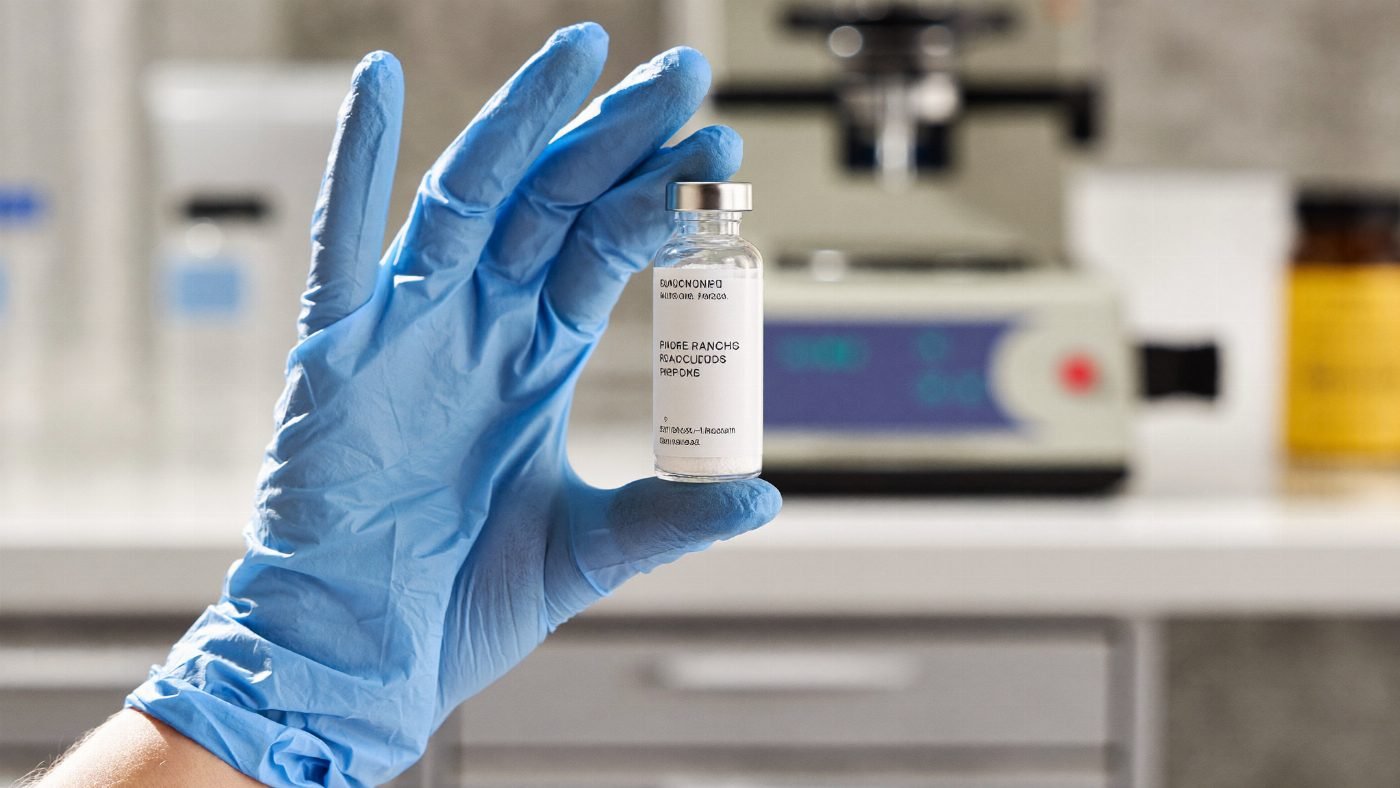
- Certificate of Analysis (COA): the lab report for that specific batch. It should name the compound, the batch number, and the purity — and the batch number should match your vial.
- HPLC purity: High-Performance Liquid Chromatography is the standard method for measuring purity. Look for a figure at or above 99%, tested per batch.
- Third-party testing: an independent lab is stronger than an in-house claim.
Every 94 Supreme batch ships with its own COA
Third-party tested to HPLC ≥99%, per batch — not one old test reused forever. See the certificates before you order.
Handling BPC-157 in a research setting
In a lab context, BPC-157 typically ships as a lyophilized (freeze-dried) powder and is reconstituted with bacteriostatic water for research use. Two practical notes that come up constantly:
- Reconstitution math — getting concentration right is arithmetic, and it is easy to slip a decimal. Our free tool handles it: the peptide reconstitution calculator.
- Storage — lyophilized peptide is generally most stable frozen; once reconstituted, potency declines over time depending on temperature. Our storage potency calculator estimates that curve.
Note what this section is not: it is not a human dosing protocol. BPC-157 is a research compound and is not for human or veterinary use.
Frequently asked questions
Is BPC-157 approved or safe for people?
No. BPC-157 is not an approved drug or supplement. It is sold and studied as a research chemical only. Most of the published data is from animal and in-vitro studies, and human clinical evidence is limited.
What does "pentadecapeptide" mean?
It simply means a peptide made of 15 amino acids. BPC-157's sequence is derived from a protein found in gastric juice.
What is BPC-157 most researched for?
The largest body of preclinical work looks at soft-tissue models (tendon, ligament), the gastrointestinal tract, and angiogenesis (new blood-vessel formation). These are research questions, not established outcomes in humans.
How is BPC-157 different from TB-500?
They are different molecules studied for overlapping tissue-repair questions. BPC-157 is a 15-amino-acid peptide from a gastric-juice protein; TB-500 is a synthetic fragment of Thymosin Beta-4. See the comparison table above.
Why does purity matter so much?
In research, impurities are variables. A COA with a per-batch HPLC purity figure tells you what is actually in the vial, so your results reflect the compound and not contaminants.
How should BPC-157 be stored?
As a lyophilized powder it is generally most stable frozen; reconstituted solution loses potency faster at warmer temperatures. Our storage calculator estimates the decline.
Research BPC-157, tested and shipped from Canada
HPLC ≥99%, a COA for every batch, and 1–3 day Xpress Post across Canada.
References
- Chang C-H, Tsai W-C, Lin M-S, Hsu Y-H, Pang J-HS. (2011). The promoting effect of pentadecapeptide BPC 157 on tendon healing involves tendon outgrowth, cell survival, and cell migration. Journal of Applied Physiology. PubMed
- Gwyer D, Wragg NM, Wilson SL. (2019). Gastric pentadecapeptide body protection compound BPC 157 and its role in accelerating musculoskeletal soft tissue healing. Cell and Tissue Research. PubMed
- Sikiric P, Seiwerth S, Rucman R, et al. Stable gastric pentadecapeptide BPC 157 (review body of work). Current Pharmaceutical Design / Current Medicinal Chemistry. PubMed
- Seiwerth S, et al. BPC 157 and standard angiogenic growth factors. Current Pharmaceutical Design. PubMed
Citations point to PubMed so you can read the primary sources directly. The literature is predominantly preclinical; human clinical evidence is limited.
For research use only. Not for human or veterinary consumption. This article is educational and describes findings from published preclinical research; it is not medical advice and not a dosing protocol. Products are sold strictly as research chemicals.